Melaka's Peranakan chefs spill secrets on what keeps tourists coming
Advertising
Asia
Melaka'southward Peranakan chefs spill secrets on what keeps tourists coming
Two chefs running thriving restaurants in Melaka'due south city centre reveal how they modernise Peranakan recipes to cater to tourists while maintaining the authentic flavours.
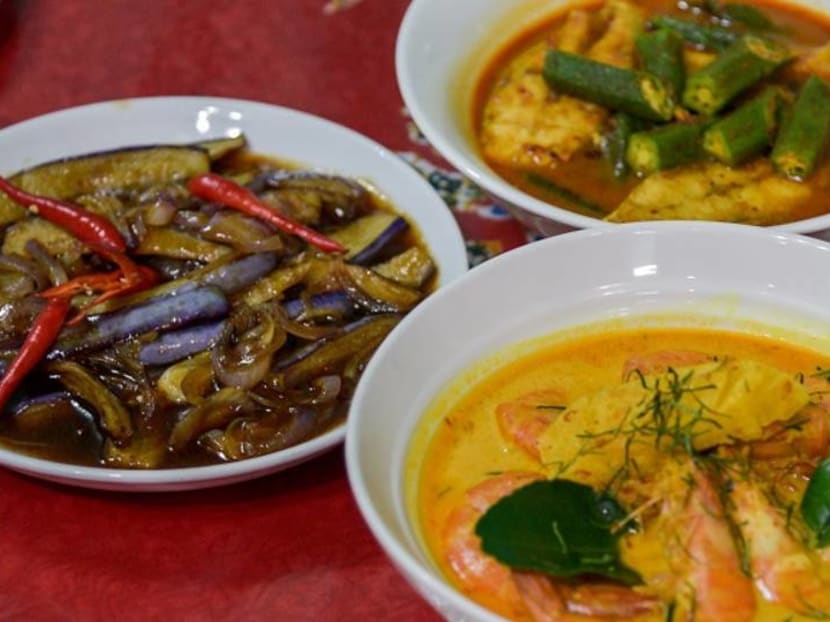
Peranakan dishes udang lemak nenas, terung tempra and asam fish served at Kochi Kitchen. (Photo: Fadza Ishak)

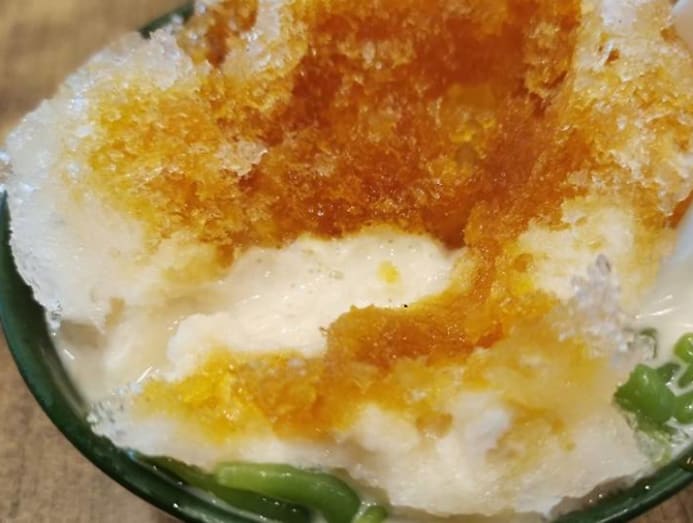
MELAKA: Soaked in creamy coconut milk and topped with green gummy rice and red beans, the iced dessert had the singled-out caramel notes of gula Melaka, a palm sugar originating from the state its been named after.
The dessert, chendol, is the icing on the cake afterwards a hearty meal at Nancy'due south Kitchen, one of Melaka's most popular Peranakan restaurants.
"Very gao", a Singaporean visitor told me while slurping his chendol. He was using the Hokkien term for thick.
"Nothing like what's back home," added the middle-aged male person who declined to exist named.
The restaurant founder, Ms Nancy Mok, has served countless bowls of chendol since her eating place opened 20 years ago.
And what makes the dish stand out at Nancy'south Kitchen is its rich and flossy texture.
"We boil the rice jelly to make it warm, use accurate gula Melaka and concentrated kokosnoot milk. Visitors love the texture," said Ms Mok.
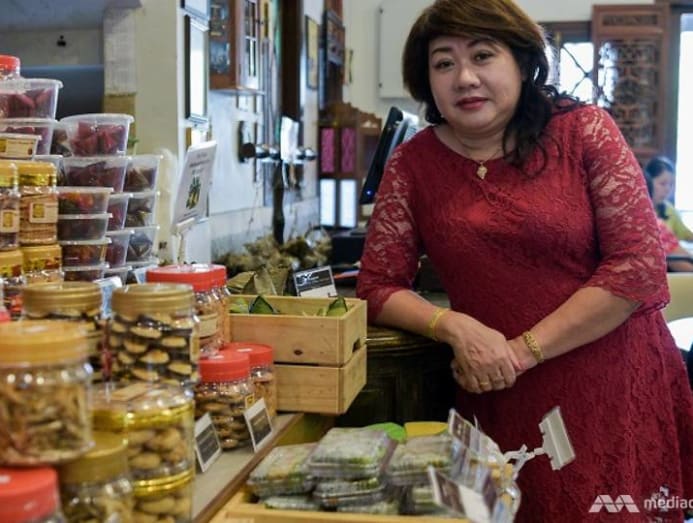
The outlet is located at a two-storey shop business firm just a short drive from Melaka'due south celebrated centre.
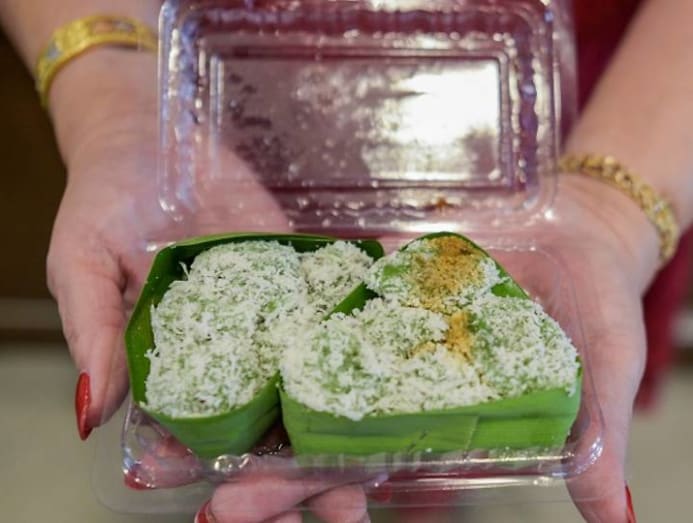
Popular chief dishes include geram asam fish and pork stewed with earthy, smoky keluak basics (babi pongteh with buah keluak). The restaurant is also widely known for homemade snacks similar buttery pineapple tarts and bright light-green ondeh ondeh that ooze melted gula Melaka.
According to Ms Mok, the restaurant serves 300 to 500 people daily, of whom around 60 per cent are tourists from neighbouring Singapore.
"They (Singaporeans) usually drive by Melaka on the manner dorsum from Genting Highlands or Kuala Lumpur, then they will stop past the eatery for a meal," she said.
"(The taste of) Peranakan food in Melaka is more 'gao' than Peranakan food in Singapore, that's why they keep coming," she added.
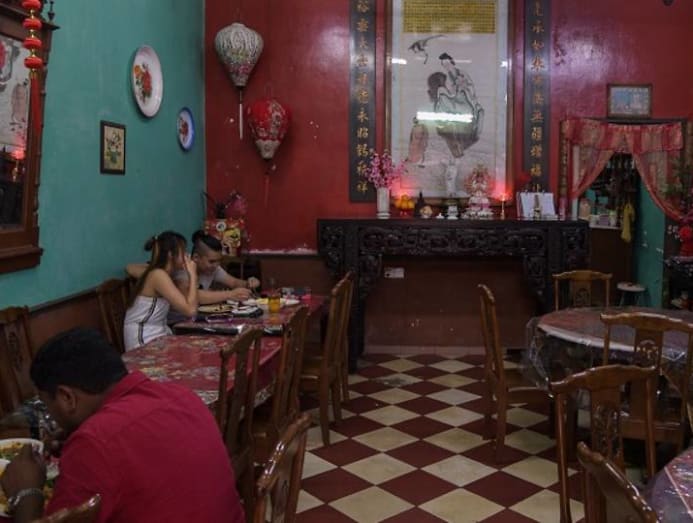
Another Peranakan eating house pop among strange visitors is Kochi Kitchen. The establishment is located within walking distance of the famous Jonker Street, in a cosy majestic 200-year-sometime Peranakan shophouse replete with antiques and old family photos.
It has a wide-choice of food that appeals to foreigners, including vegetarian options and halal meat.
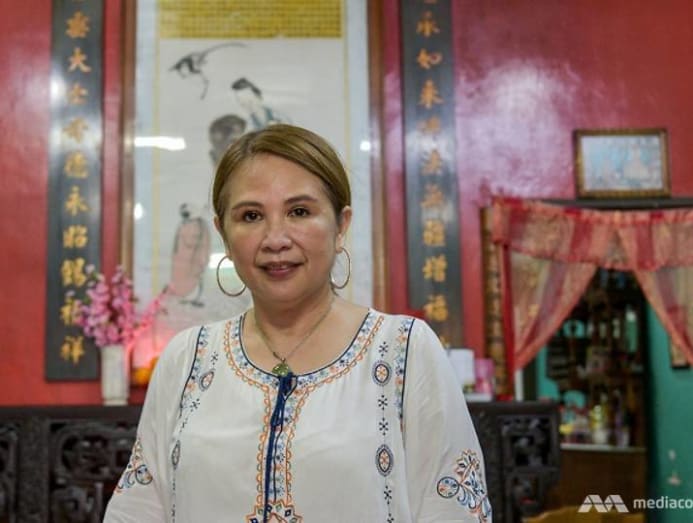
The key to winning the hearts of visitors is to be adjustable, said Kochi's co-founder and chef in accuse of daily operations, Ms Suzy Goh.
TWEAKING RECIPES FOR THE Strange PALATE
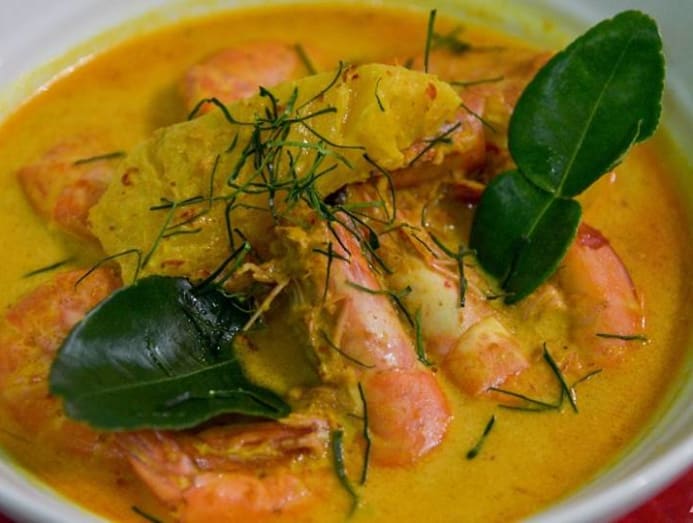
Although it could be regarded as less authentic, Ms Goh revealed how she would, for instance, remove the prawn shells from her udang lemak nenas, as it would make the dish more appealing to Western visitors.
"When we peel the shells, they will detect it more appetising and terminate the dish. They fifty-fifty slurp the gravy until there's aught left," said Ms Goh.
Both she and Ms Mok have also introduced vegetarian options in their menu, although traditional Peranakan cuisine is typically meat-based.
Ms Goh estimates that 20 per cent of visitors to Kochi Kitchen are vegetarians, and she would point them to options such as mock asam fish and crispy rolls.
"Vegetarian options are increasingly popular. I will signal them to the vegetarian department of our carte and in that location are lots of choices to pick from," she said.
She added: "We accept the Mat Sallehs (Caucasians), South Koreans, and fifty-fifty the Tibetan monks come to endeavor our nutrient. The vegetarian options don't gustation 100 per cent like the original meat-based dishes, but those who have tried have only practiced things to say."
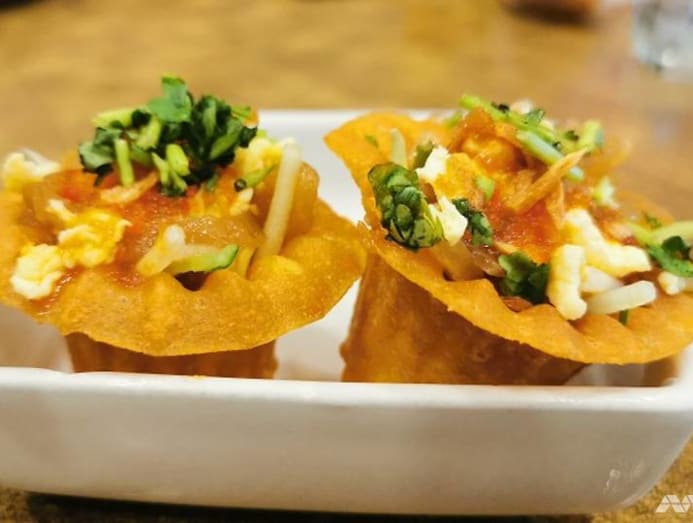
Ane of her most popular vegetarian dishes is kueh pie tee, pastry tart beat filled with a spicy, sweetness blend of Chinese turnip, cucumber, egg and a dash of sambal.
The crispy beat out combined with the yummy filling is already tasty, only the chilli gives information technology a spicy flavour.
FRESH INGREDIENTS FOR Taste
Despite efforts to cater to visitors' taste buds, an insistence on fresh ingredients is still the most important factor, said Ms Mok.
She uses a special shallot supplier and prefers fresh chilli over powdered chilli for her dishes.
Ms Mok too revealed how Nancy's Kitchen has its own factory that manufactures its own spice paste. Only selected workers are immune to operate the equipment to maintain the secrecy of the recipes.
"Nosotros have just one restaurant, but we accept a factory to manufacture the paste and rempah ratus (spices) nosotros employ. We besides sell the paste in packets. Customers buy them to bring dorsum to cook at home," she said.
Similarly, Ms Goh explained how she imports fresh buah keluak from Indonesia for her ayam buah keluak dish, and fresh turmeric, basil, kaffir lime leaves and spices for her lemak nenas and asam fish to give the dishes strong color and taste.
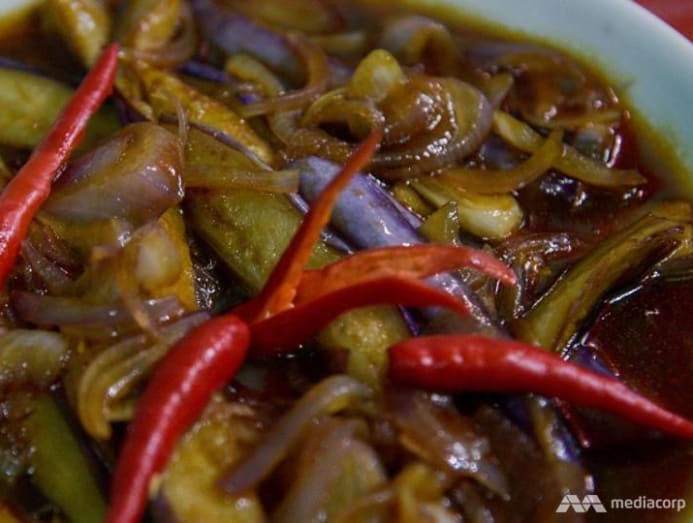
"So somehow or rather the gravy (for these dishes) will stop. We control the spiciness and the thickness, so people volition slurp up the gravy as well. The spices play an of import part of grade," she said.
FROM AGAK-AGAK TO PERFECT
Both chefs also stressed the importance of staying true to their Peranakan roots while formulating dishes that are marketable.
They were trained by their mothers and grandmothers in the kitchen in their youth, where agak-agak, the nonya term for estimation of ingredients used, was an important function of cooking.
When they decided to open restaurants, they had to refine the recipes and find the right balance of ingredients.
"In traditional Peranakan families, the nyonyas always do the cooking," said Ms Goh. "I was drilled (on how to cook) as a young girl. The minute I entered the kitchen, it would be non-stop drilling until food was prepared. Just information technology shaped me to become the chef I am today," she recounted.
Ms Mok recalled how, from 1999, she worked hard to perfect her dandy grandmother'due south recipe.
"I put things together, made things consequent. It started off with merely me and my parents, merely now I have 36 workers, all trained past me. They each have their own job — some cook main dishes, some stir-fry ingredients. But I make sure the quality is the same, the gustation is the same," she said.
She does it for her customers, many of whom are attached to her cooking as information technology reminds them of dishes cooked by their parents or grandparents.
"Some of the Melaka Peranakan recipes have been lost over the generations. My dishes would remind them of the home-comfort nutrient they require," she added.
Source: https://cnalifestyle.channelnewsasia.com/asia/malaysia-melaka-peranakan-food-secrets-tourists-228876
0 Response to "Melaka's Peranakan chefs spill secrets on what keeps tourists coming"
Post a Comment